
Research & Exploration
What’s the Purpose of the Book Detail Page?
It’s self-evident that a detail page is a fundamental to a catalogue website, but in approaching an update to such a critical page, it was vital that we understood precisely why.
The Reader’s Journey
Much of my product and design thinking at Goodreads was influenced by a foundational research tool we called ‘The Reader’s Journey’.
Overview of the Reader’s Journey Framework. Developed through research led by Brandi Luedeman, 2017-2018.
This user journey framework helped product and design build features to better address the needs of readers, based on their stage in the journey.
User Stories
With this framework in mind I conducted qualitative research; interviewing customers about how book detail page fits into their own reading journey. Simultaneously, my team partners collated analytics of session behavior, and together we synthesized our findings into the following user stories:
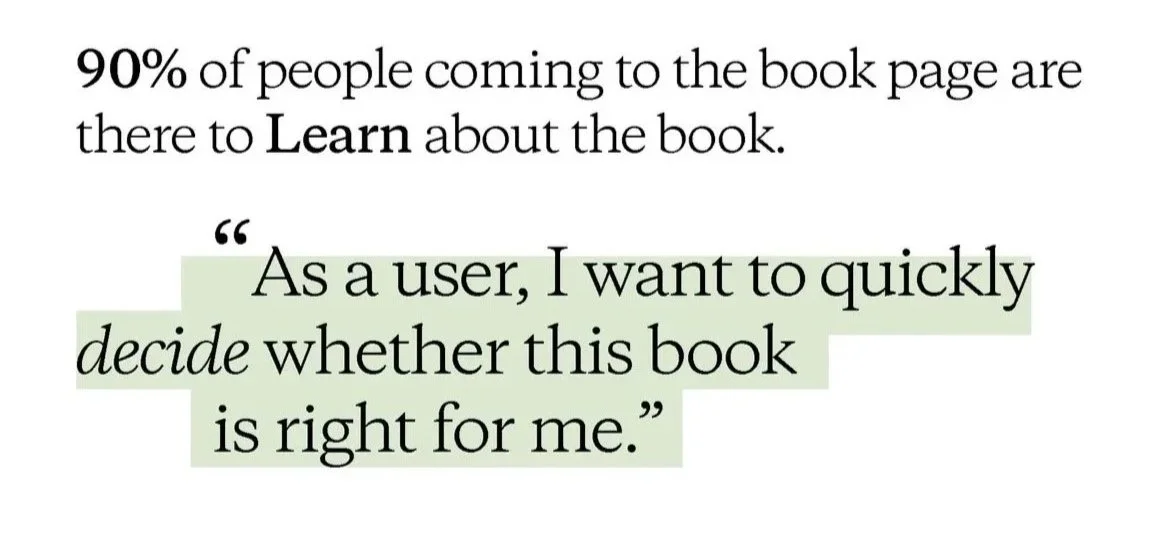
The Book Deal Page impacts every stage of this user journey, but its most critical role is in the ‘Learn’ stage. After a customer discovers a book that interests them, the detail page is critical in helping them decide whether the book was worth acquiring. The average 'Learn' customer is not yet a Goodreads member.
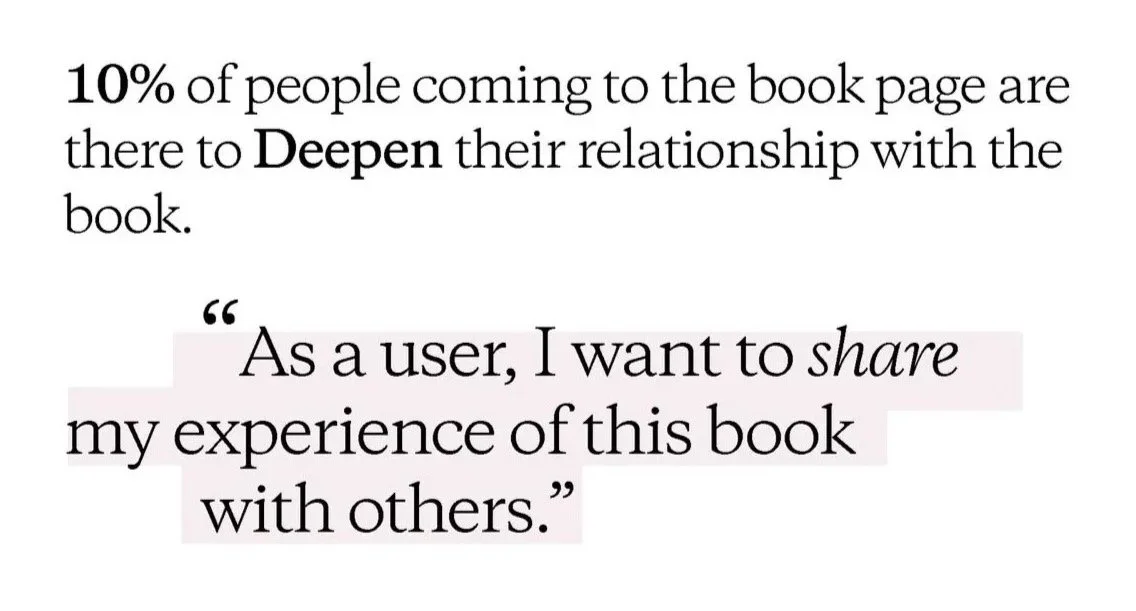
Deepening ones relationship with a book is a significantly less frequent user segment, but these highly engaged readers are just as important, because they generate the high-quality book reviews, a key brand differentiator for Goodreads.
The unique text also contributes to a high SEO ranking, which helps Learn customers discover Goodreads on external search engines.
Though initially it may seem that the Learn use case is the most important aspect of the page, the contributions of our most deeply engaged users are fundamental to what makes Goodreads valuable to the casual ‘Learn’ user. Both user stories are crucial for any viable design of the page.
Exploratory Exercises
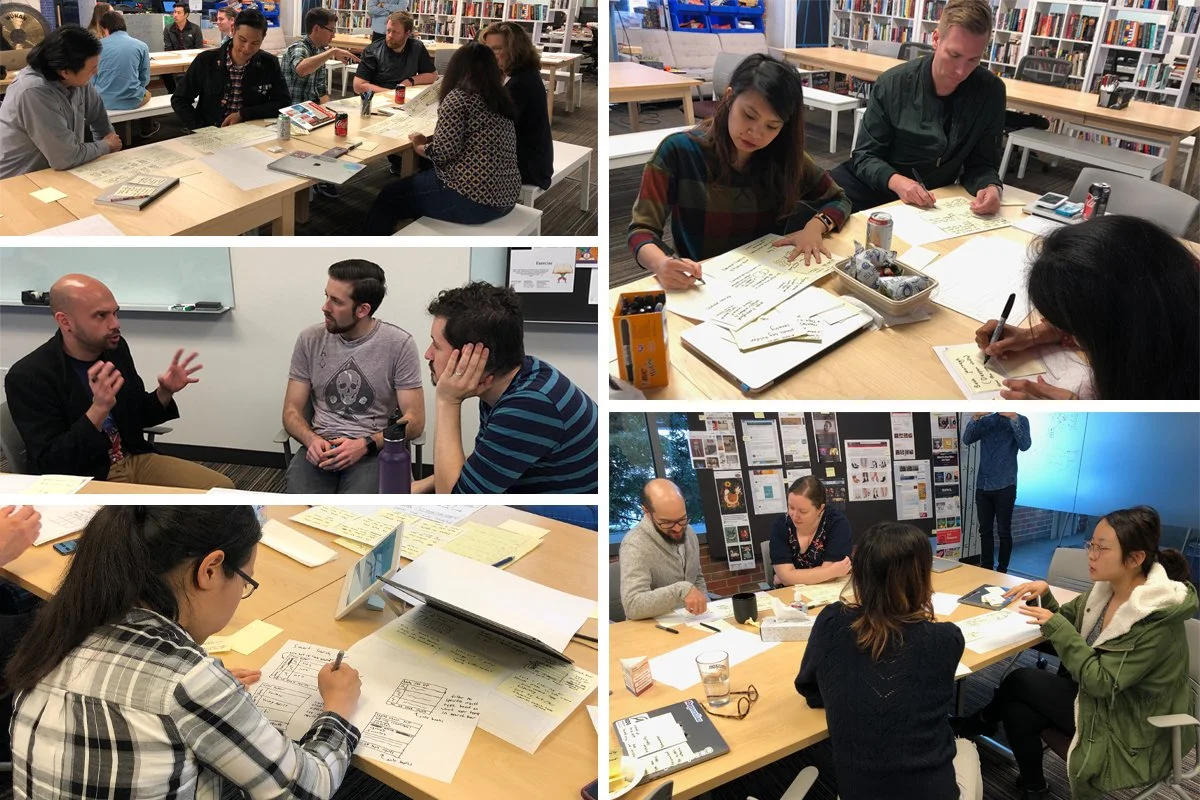
To avoid settling back into rebuilding the book page with all the same assumptions baked into the previous solution, I conducted an accelerated Design Sprint that invited our team and other key stakeholders within the company to imagine radically different ways of presenting books and engaging readers.
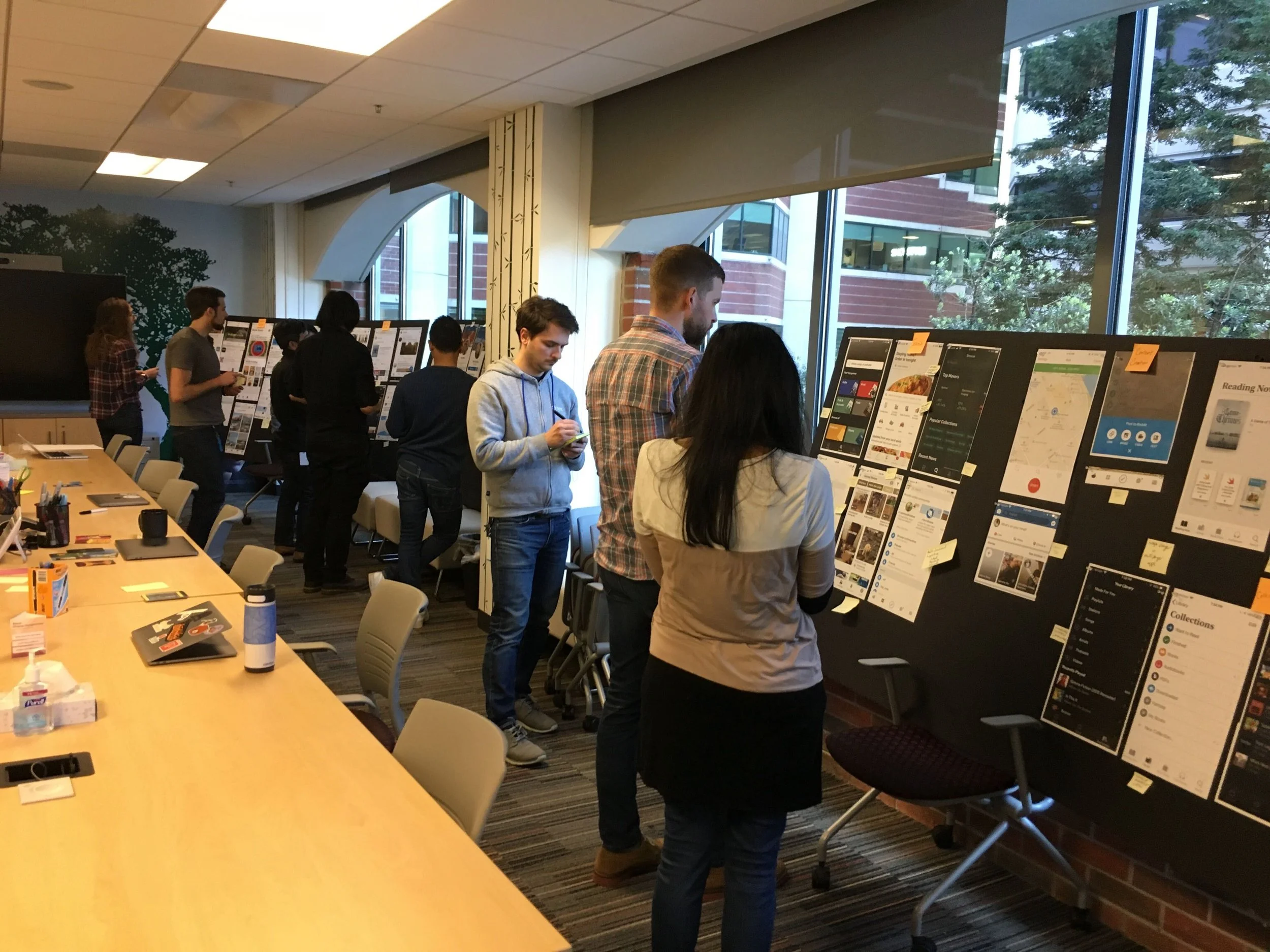
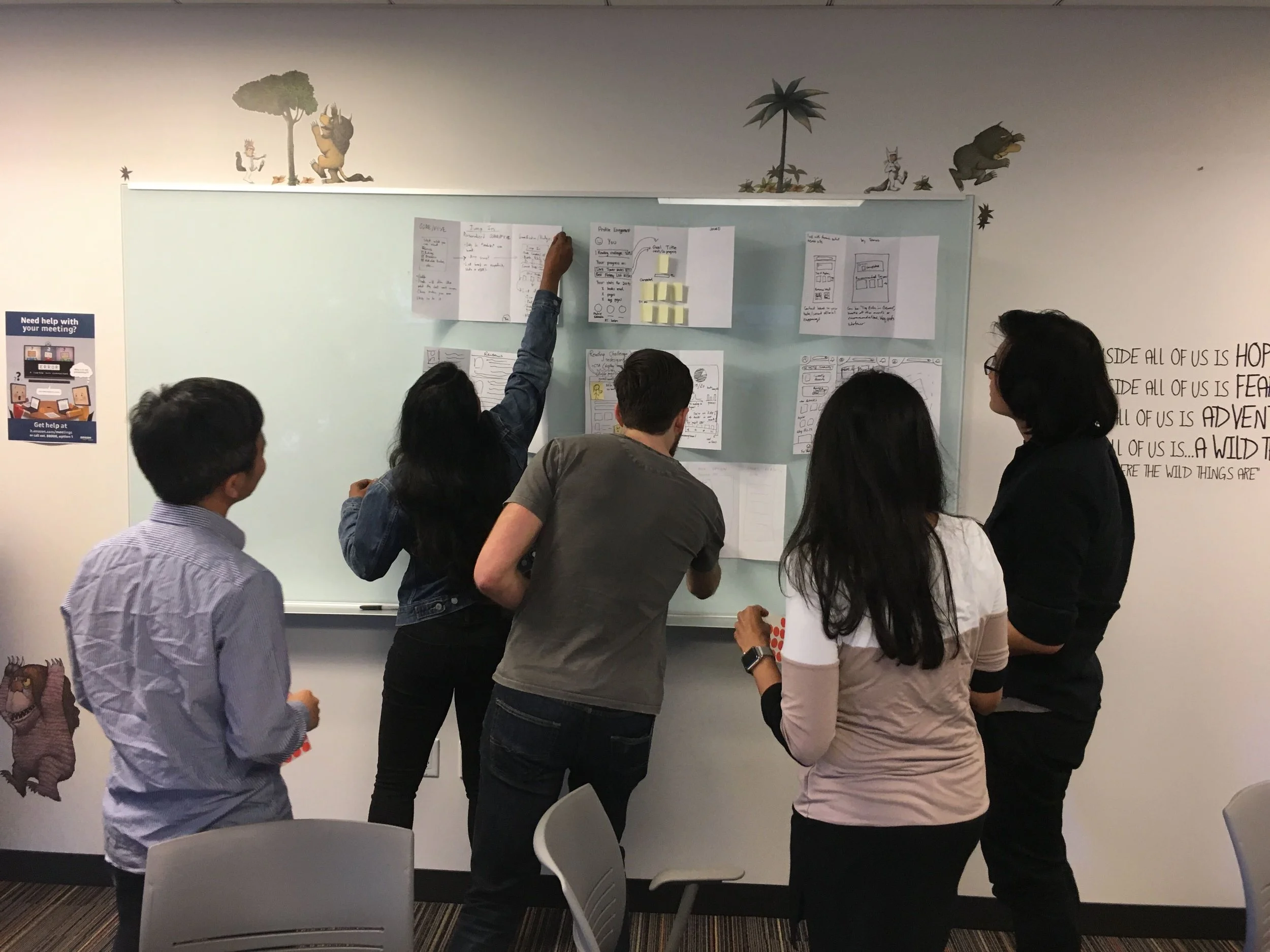
With strong user stories to guide us, and batch of fresh ideas to consider we proceeded to evaluate how well the existing product page addressed these needs, and in so doing define the scope of our opportunity.